Page Not Found
Page not found. Your pixels are in another canvas.

A list of all the posts and pages found on the site. For you robots out there is an XML version available for digesting as well.
Page not found. Your pixels are in another canvas.
Hithaishi
Published:
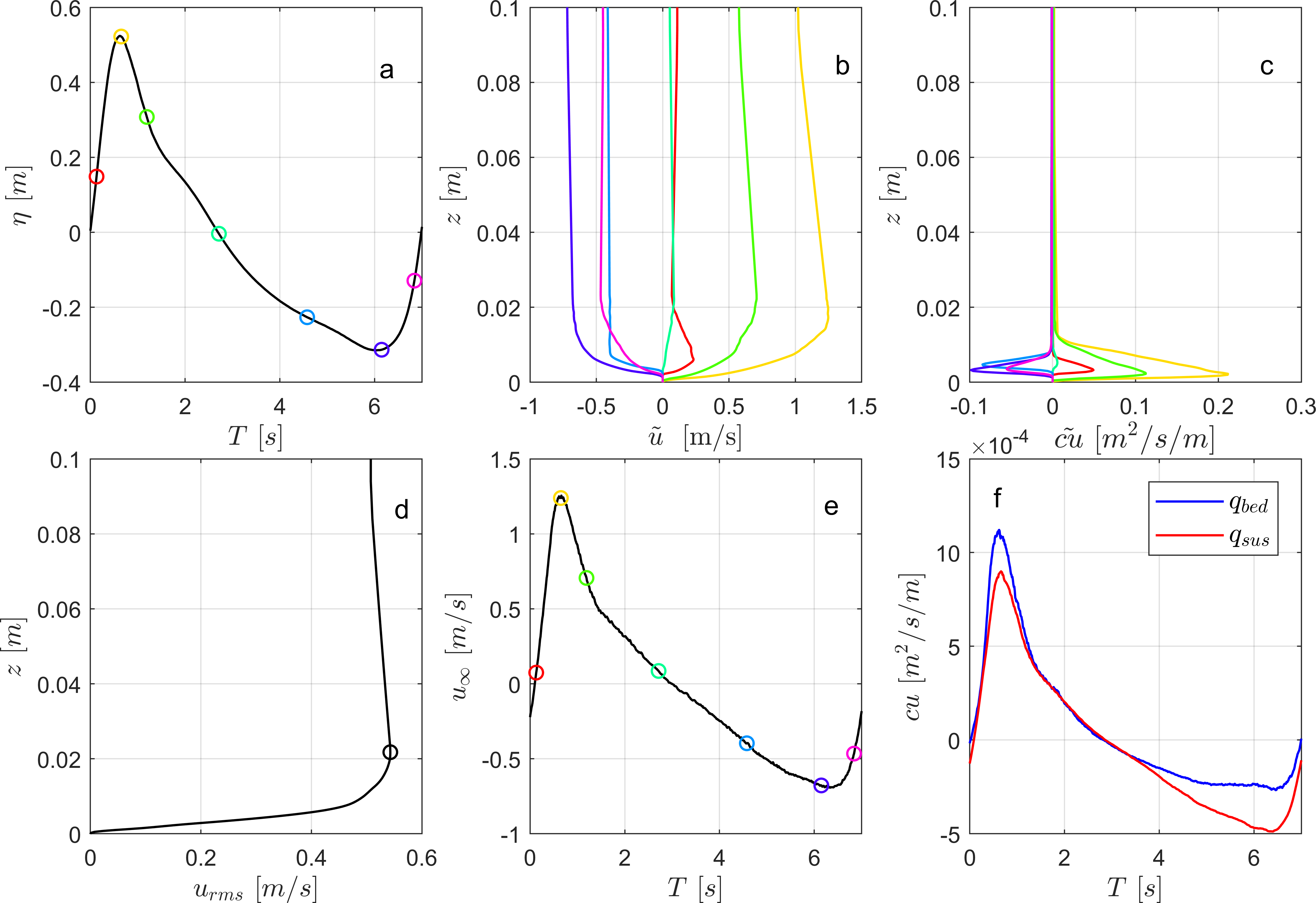
Sediment transport and morphology was sucessfully implemented into the 3D wave resolving model SWASH. Sediment transport fluxes are calculated, taking acceleration and velocity skewness into account. The sediment transport of the model was validated using flume data, and it was able to reproduce the bedload correctly. Using this new implementation, we can assess the ability to reproduce onshore sandbar migration observed in measurements. This work primarily focuses on data collected at the Field Research Facility in Duck, NC. The newly implemented sediment transport and morphology feature in SWASH provides a valuable tool that will be used to improve the parameterization of the velocity profile and wave-shape-related sediment transport in wave averaged models such as XBeach and COAWST.
Published:
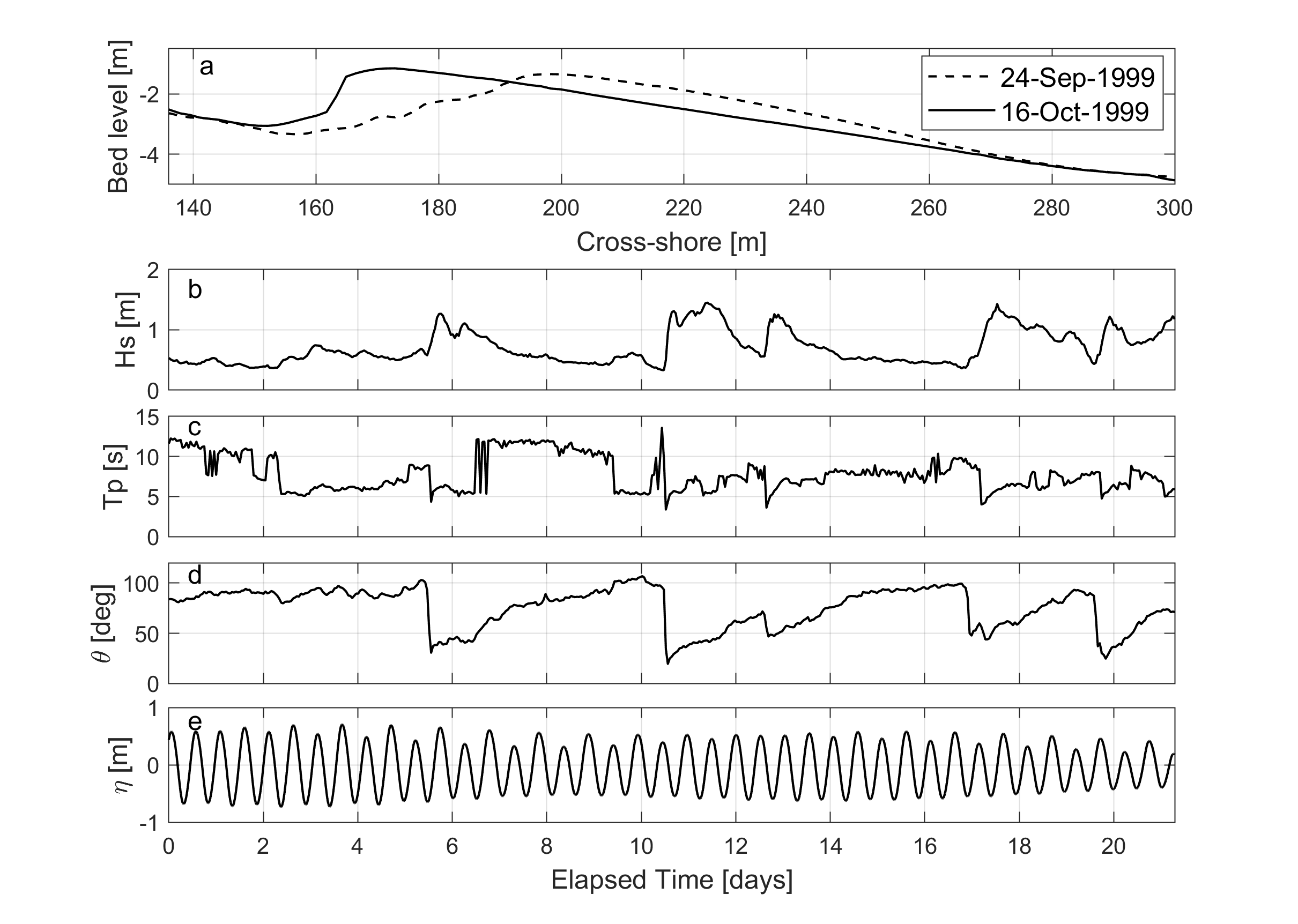
Successful modeling of sandbar behavior is challenging due to the complex hydrodynamics processes which drive sediment transport and morphological changes. Finely tuned wave-averaged models have been shown to have some predictive capabilities for single sandbar migration cases, but they have poor predictive skills when applied for other sandbar migration cases. Here we propose a simplified model for evaluating sandbar migration. Our model takes wave-averaged parameters as input, but computes non-wave-averaged sediment transport processes using a reconstructed wave signal. This method explicitly solves for the sediment transport due to wave acceleration skewness and velocity skewness, avoiding parameterizations usually implemented in phase-averaged models. This work focuses on data collected at the Field Research Facility in Duck, NC. The proposed method is capable of successfully modeling the bar evolution over multiple cases. The model is a useful tool for coastal managers and researchers to forecast sandbar migration under different hydrodynamic conditions.
Published:
Published:
Four Beach transect at Duck, North Carolina (two transects in the Northern end and two transects in the Southern end) are analyzed from 1995 till 2018. Observed cross-shore sandbar migration rates are fitted as a function of the sediment transport capacity at the peak of the sandbar. The sediment transport capacity parameter is calculated using a Bailard type energetics approach, where the suspended sediment transport is calculated by considering the 4th power of the velocity at the peak of the sandbar. The velocity over the sandbar is composed of the wave orbital velocities and mean currents. The found parameter can be used as a reasonable proxy to identify the sandbar migration rate and direction.
Published:
Four Beach transect at Duck, North Carolina (two transects in the Northern end and two transects in the Southern end) are analyzed from 1995 till 2018. Observed cross-shore sandbar migration rates are fitted as a function of the sediment transport capacity at the peak of the sandbar. The sediment transport capacity parameter is calculated using a Bailard type energetics approach, where the suspended sediment transport is calculated by considering the 4th power of the velocity at the peak of the sandbar. The velocity over the sandbar is composed of the wave orbital velocities and mean currents. The found parameter can be used as a reasonable proxy to identify the sandbar migration rate and direction.
Published:
Four Beach transect at Duck, North Carolina (two transects in the Northern end and two transects in the Southern end) are analyzed from 1995 till 2018. Observed cross-shore sandbar migration rates are fitted as a function of the sediment transport capacity at the peak of the sandbar. The sediment transport capacity parameter is calculated using a Bailard type energetics approach, where the suspended sediment transport is calculated by considering the 4th power of the velocity at the peak of the sandbar. The velocity over the sandbar is composed of the wave orbital velocities and mean currents. The found parameter can be used as a reasonable proxy to identify the sandbar migration rate and direction.
Published:
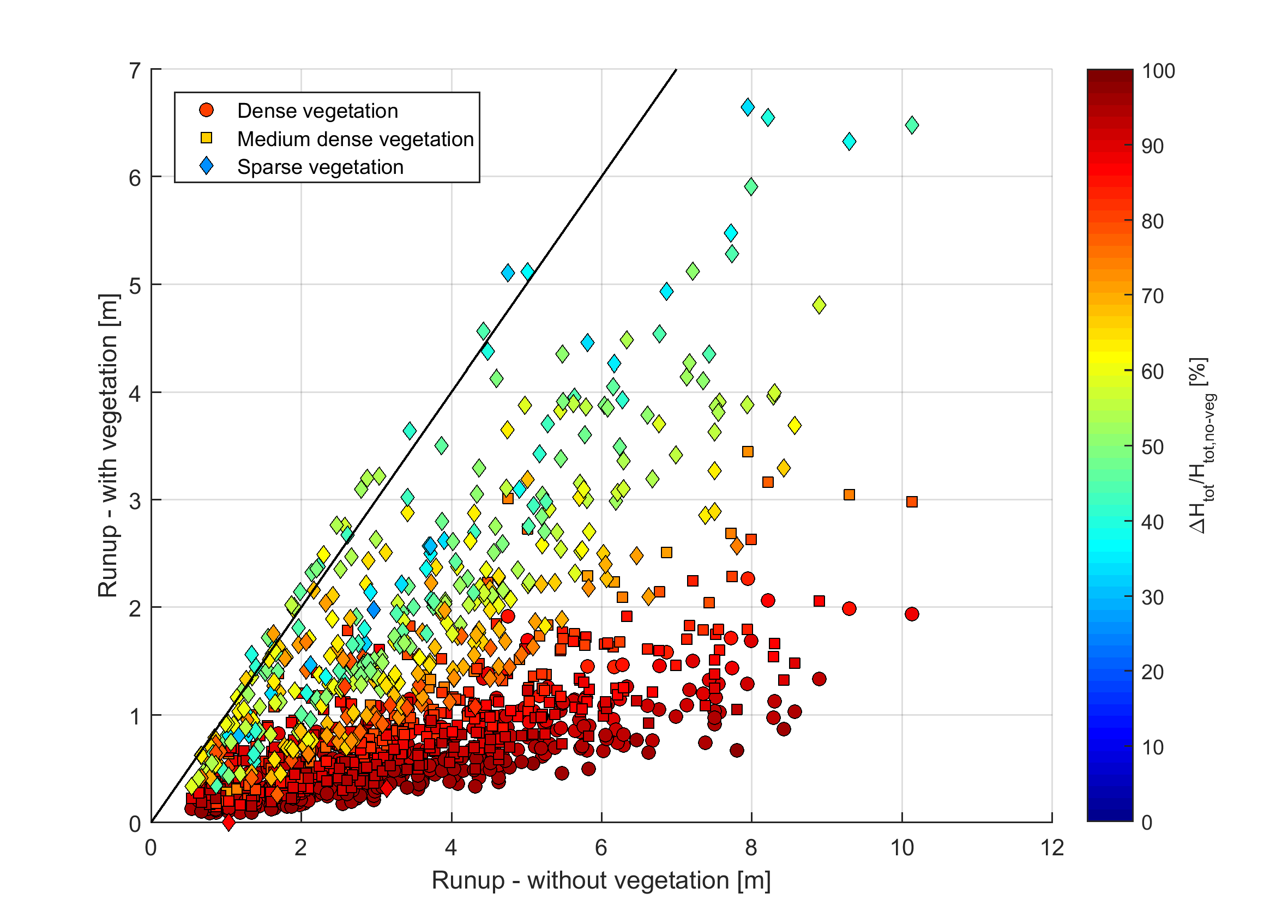
Tsunamis can cause severe destruction in coastal areas. Though the tsunami hazard itself cannot be mitigated nor eliminated, the vulnerable element can be protected by a variety of mitigation measures. Bio shields, including coral reefs, coastal sand dunes and vegetation have been known to provide protection against tsunami inundation. The protection provided by bio shields was evident after the Indian Ocean Tsunami in 2004 in many of the countries affected. In view of these circumstances, attention was focused in this study to identify the capacity of protection provided by bio shields. Small scale physical model tests have been carried out to identify the mitigation characteristics of bio shields in the form of coastal vegetation. This study focused on detailed analysis of the results obtained by model tests. The protection capacity offered by the vegetation was assessed by considering two aspects, namely energy dissipation and reduction in the extent of inundation
Hewageegana VH, Canestrelli A. On the predictive skill of morphodynamic models for onshore sandbar migration. Earth Surf. Process. Landforms. 2021;1–23. https://doi.org/10.1002/esp.5079
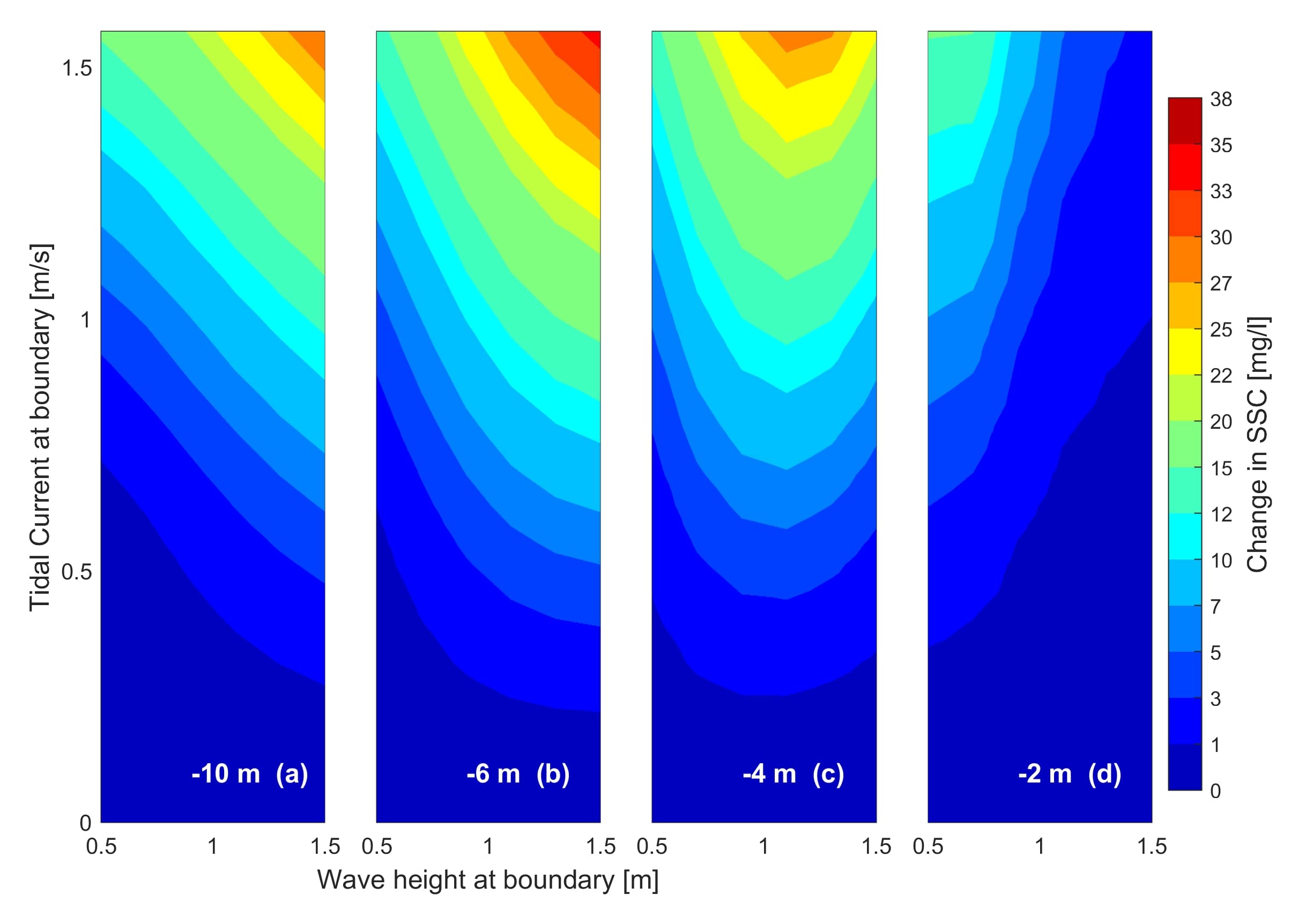
Hewageegana V.H., Canestrelli A., Numerical modeling of the influence of tides on cross-shore sediment dynamics of dissipative beaches under moderate wave conditions, Continental Shelf Research,Volume 218, 2021, 104381, ISSN 0278-4343, https://doi.org/10.1016/j.csr.2021.104381.