
Tidal influance on sediments
Introduction
In this research, the influence of tides on cross-shore sediment dynamics of a longshore-uniform beach was studied by means of a 1D numerical model (XBeach). The model was modified to include longshore tidal currents induced by water level gradients. The effect of tides on cross-shore sediment dynamics was quantified by analyzing the change in suspended sediment concentration, sediment advection velocity, and sediment transport. The effect of tides was decoupled into its two main components, i.e., water level fluctuations and tidal currents.
From this study we fill following gaps found in previous research;
- Field studies are limited to one or two locations in the cross-shore of a beach. Hence, they do not explain how the influence of tidal currents on sediment dynamic varies along the cross-shore. In addition, these studies are limited to a few wave and tidal conditions.
- Numerical studies focus only on water level fluctuations and neglect tidal currents. They employ empirical relationships that do not solve the governing hydrodynamic and sediment dynamic equations.
- No study has been performed to identify the influence of combined tidal current and water level fluctuations on sediment dynamics over the cross-shore of a beach.
Effect of Water level fluctuations
The water level flutuation due to tides changes the wave action on the beach.
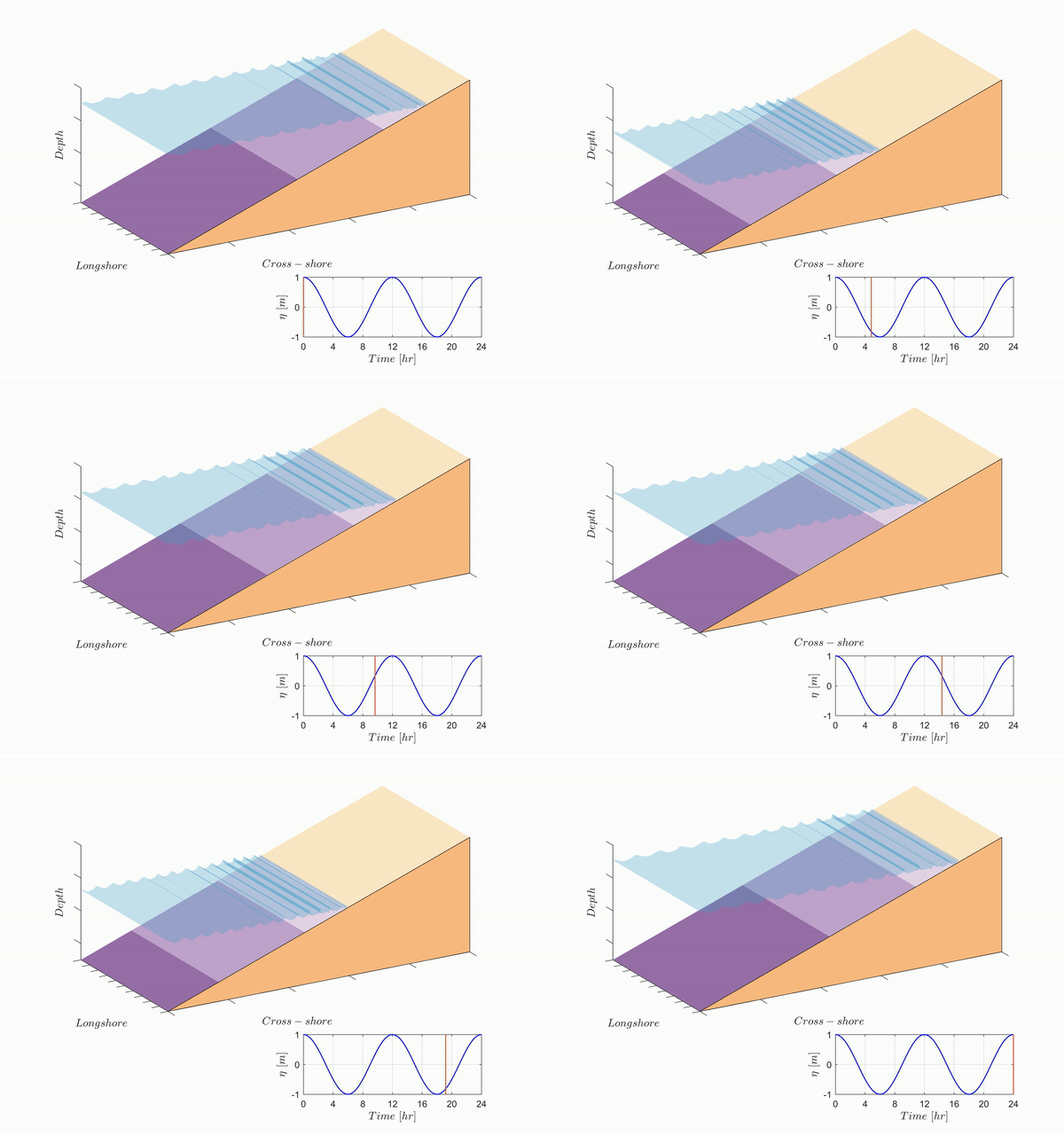
Water level fluctuations modulate wave orbital velocities, wave-averaged currents and sediment advection velocity, therefore affecting both resuspension of sediments and cross-shore sediment transport.
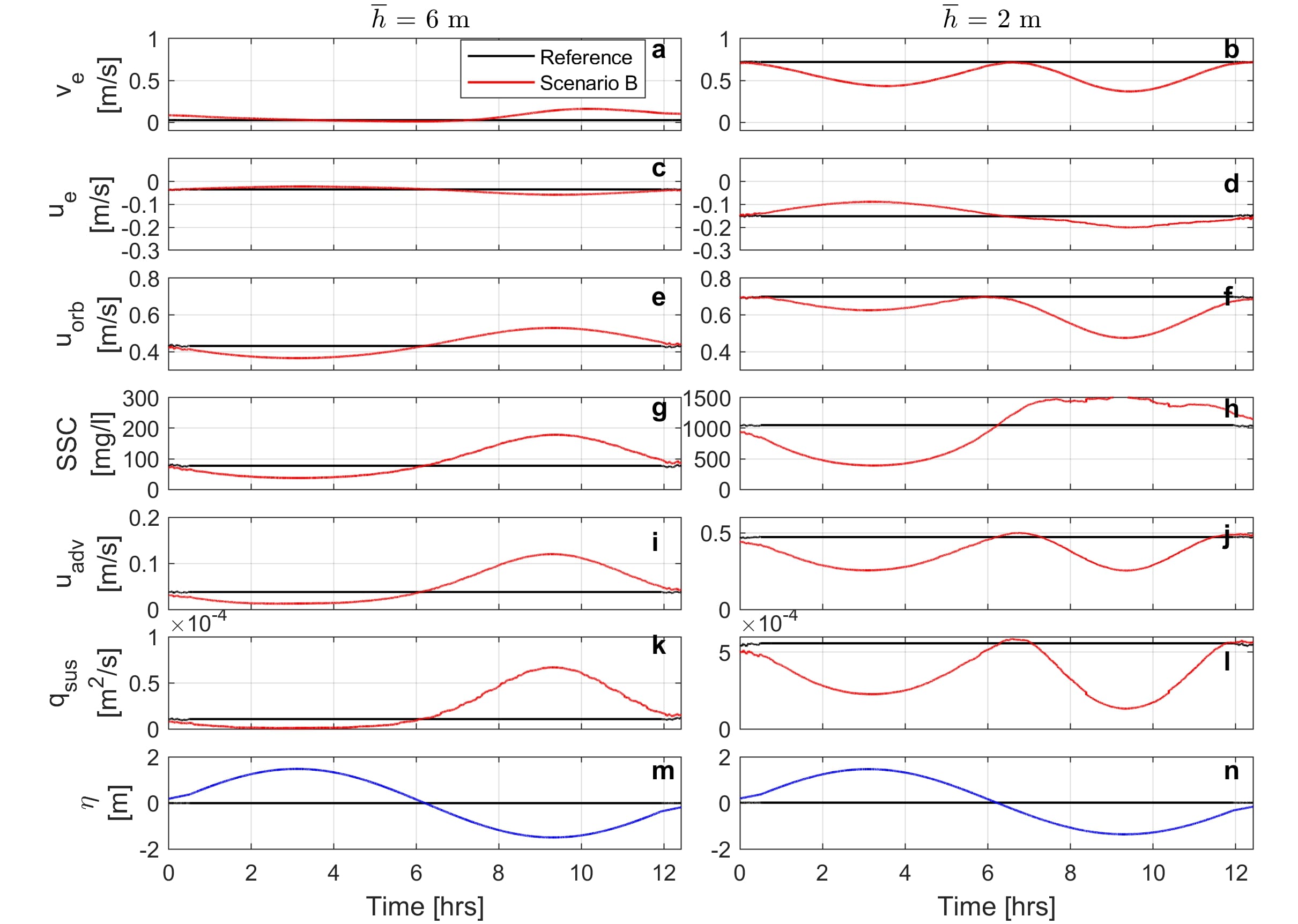
The intresting point is that,the non-linear relationships between the processes, result in a net change in sediment resuspension and transport over the tidal period.
The net change varies with cross-shore location , tidal and wave condition.
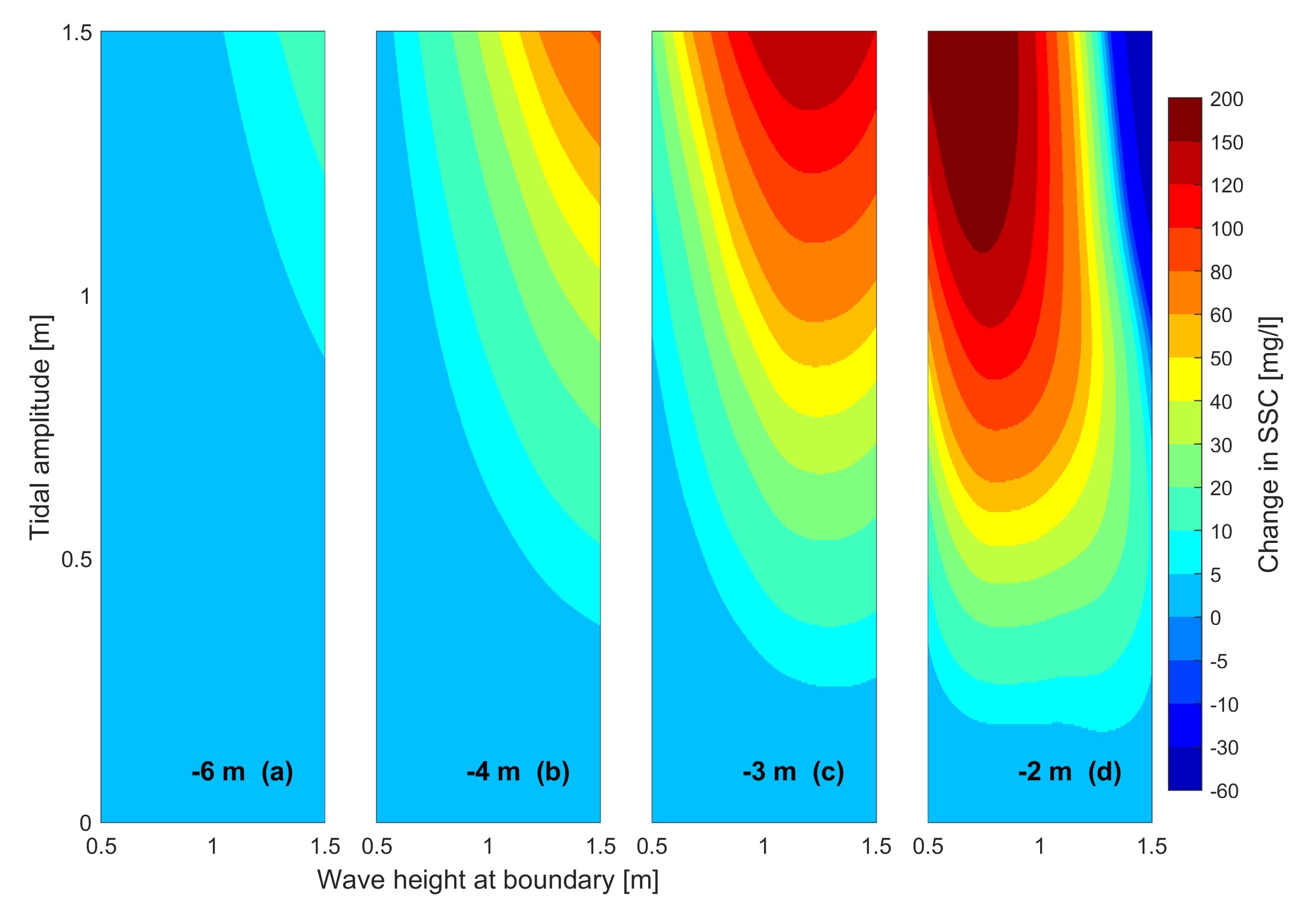
Effect of tidal currents
Tidal currents favor tidally-averaged sediment resuspension due to the increase in applied shear stress on the bed.
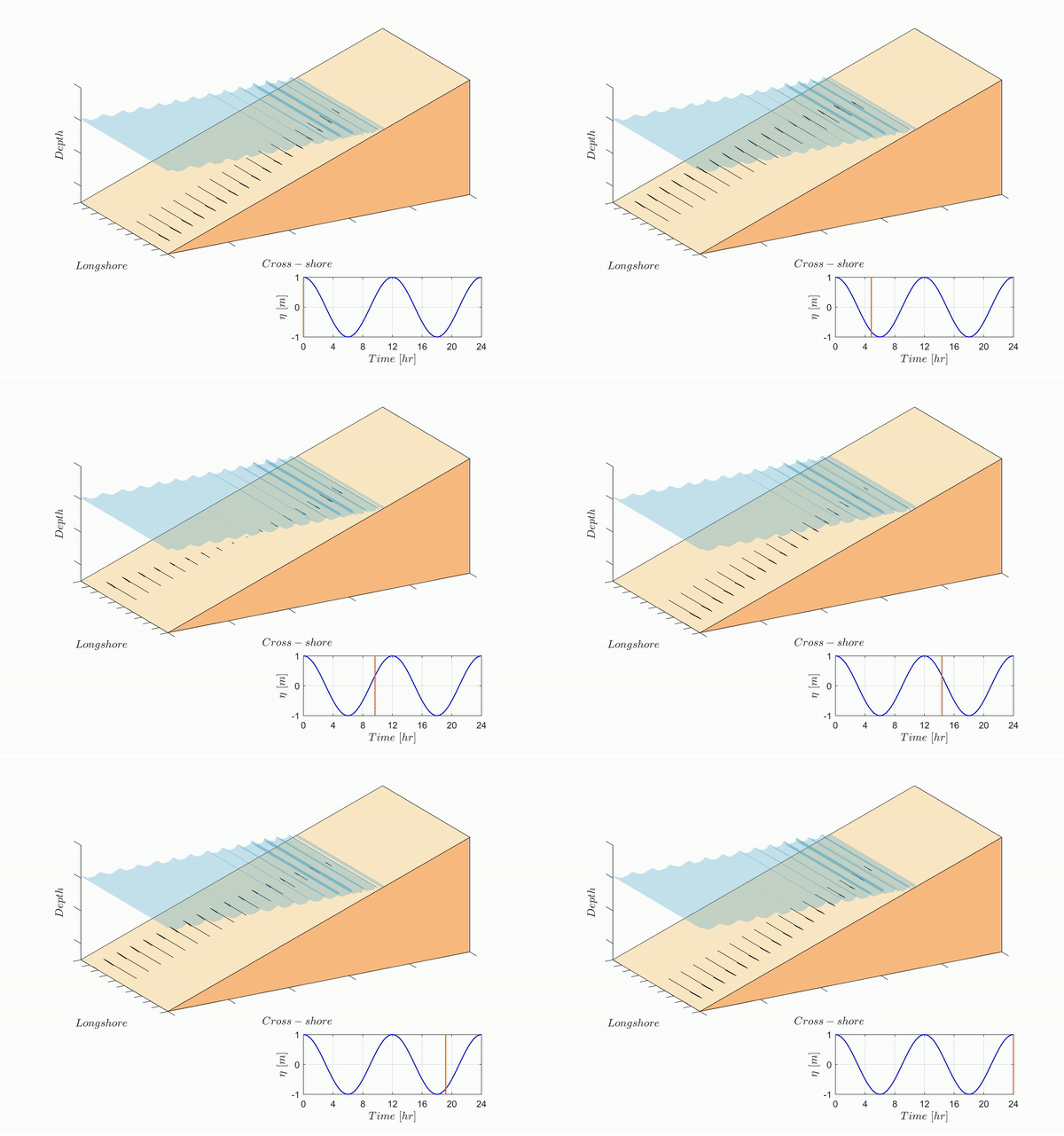
Similar to water level fluctuations, the tides modualte the sediment concentration and transport
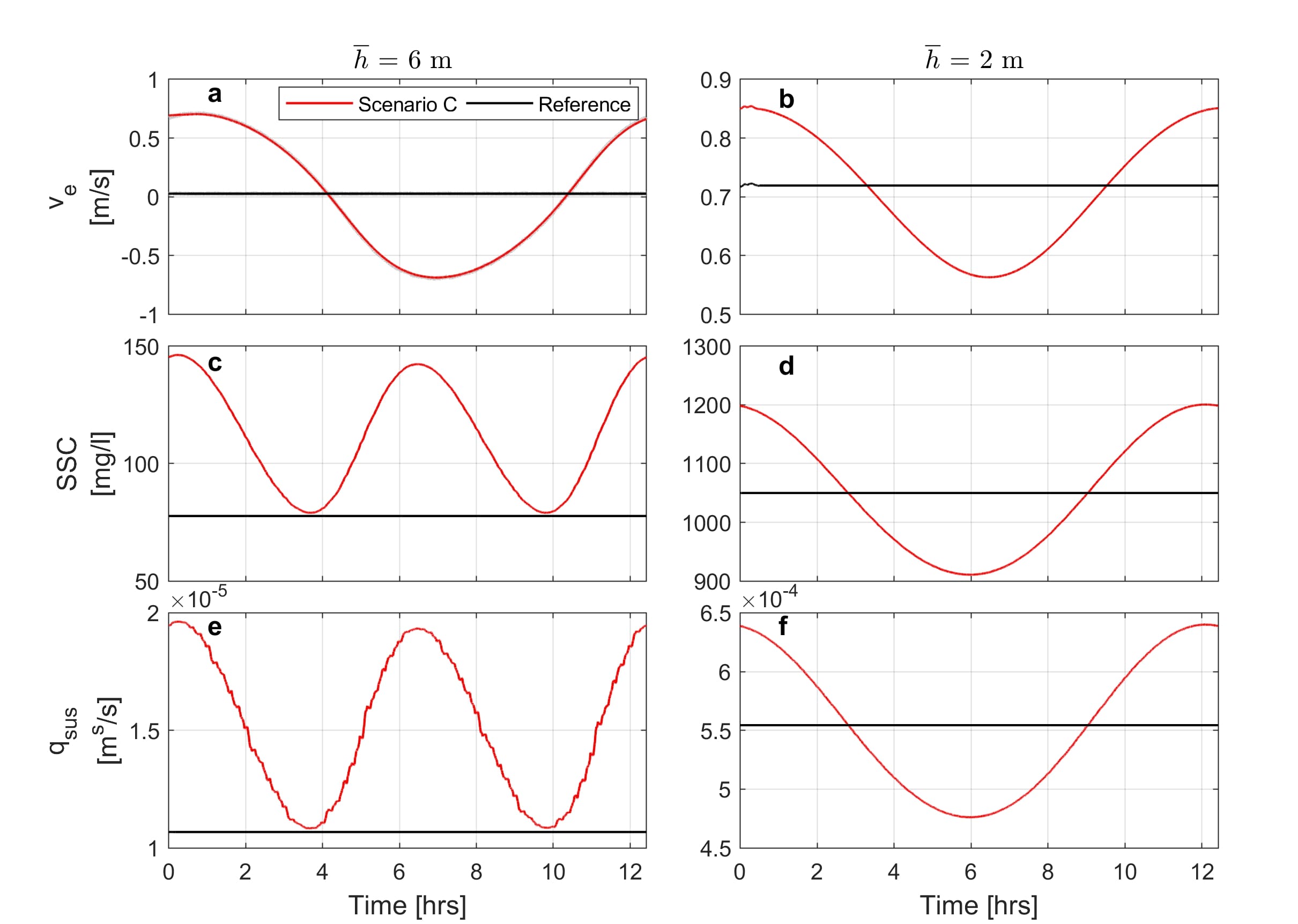
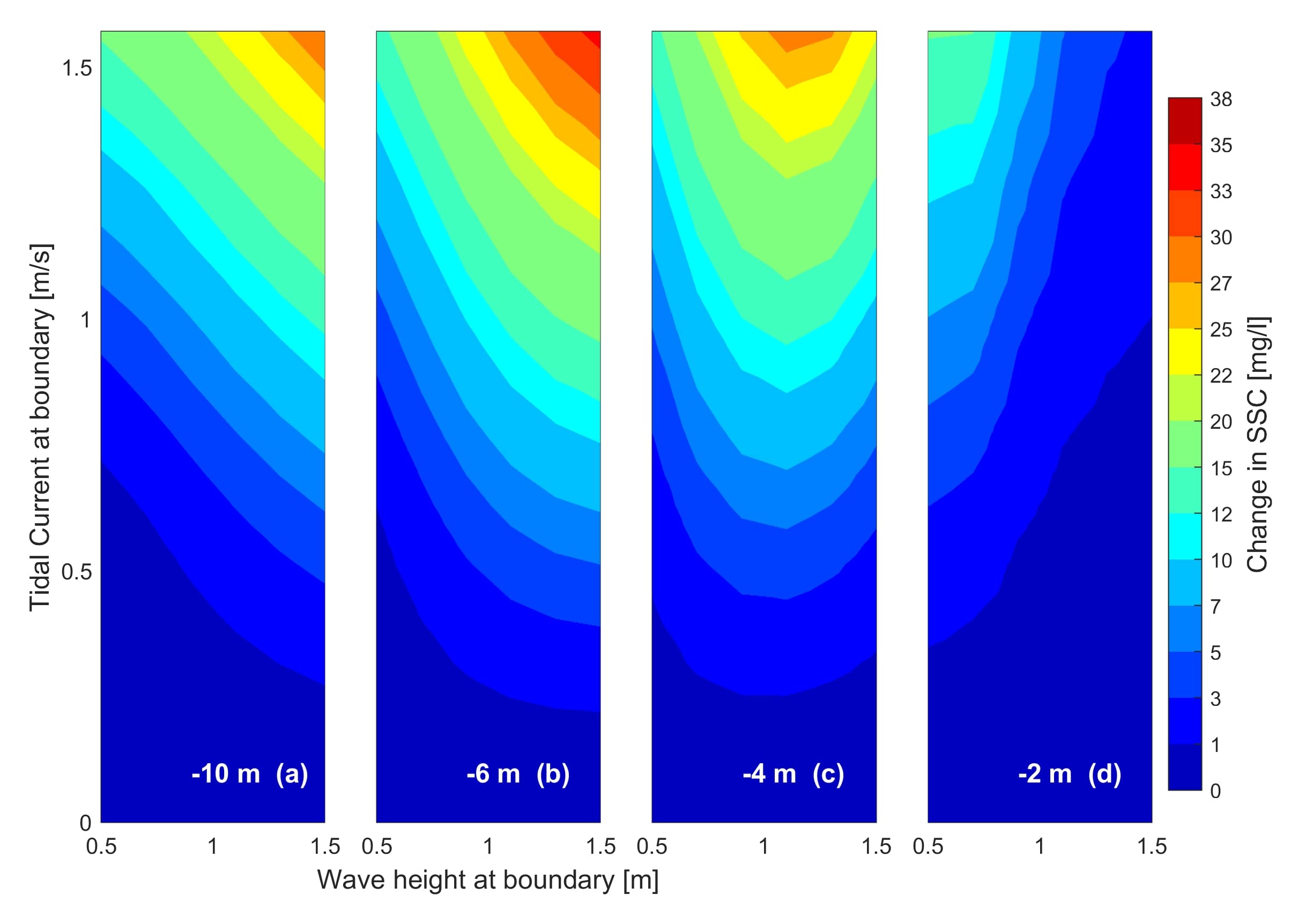
The tidal currents also results in a net change in sediement resuspension and transport. The change is dependent upon the tidal and wave conditions, and cross-shore location
Conclusions
The effects of water level fluctuations and tidal currents on sediment dynamics vary in the cross-shore direction. Tidal currents increase sediment resuspension in deeper water depth, while water level fluctuations control the changes observed in shallow waters. In shallow waters, tidal amplitude is a good indicator of the influence of longshore propagating tides on the cross-shore sediment dynamics of a uniform beach, while in deeper waters, tidal wavelength also plays an important role. The model predictions are able to capture the trends observed in field measurements.